
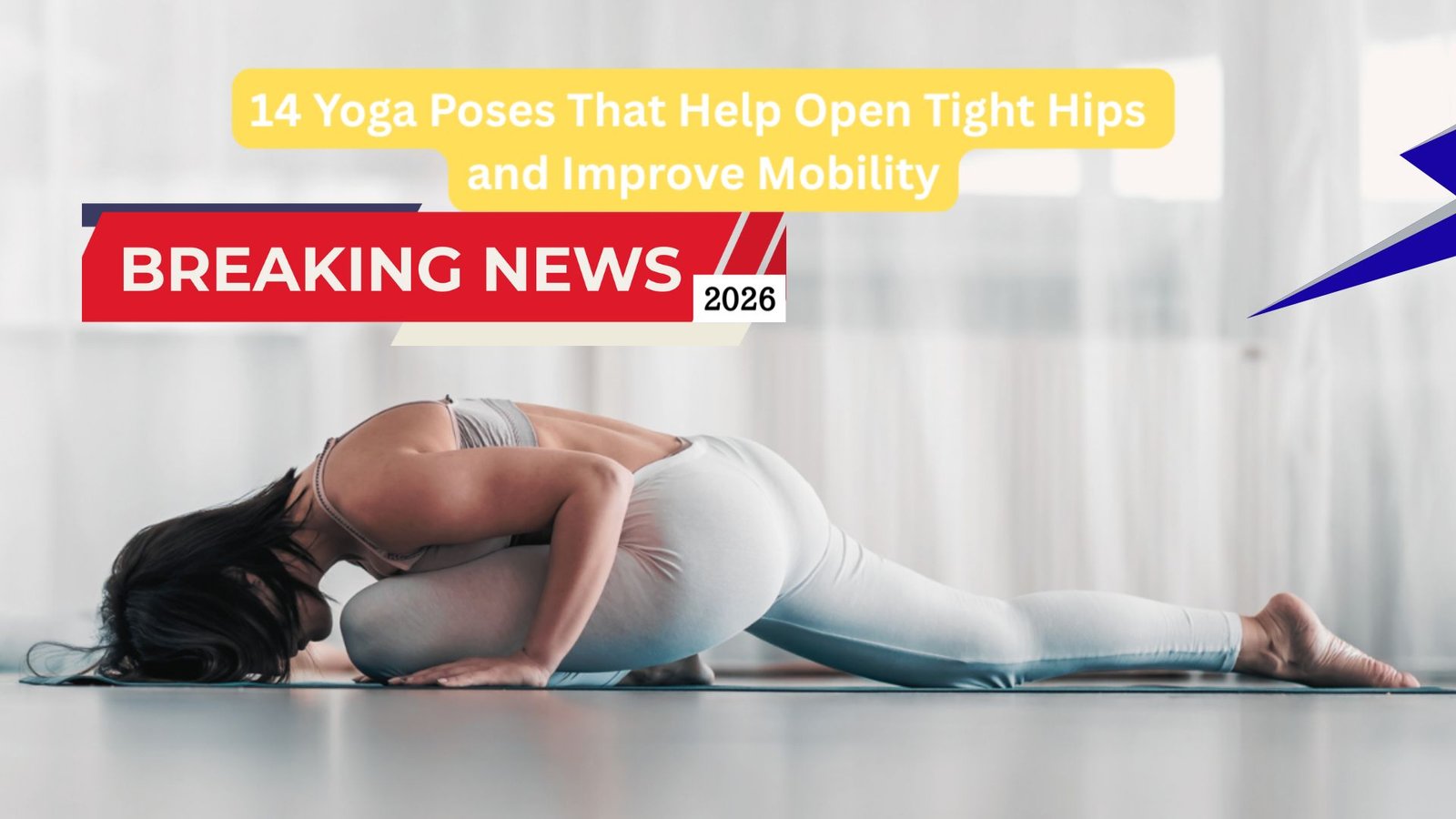
Tight hips are a common problem for many people today. Long hours of sitting, stress, and repetitive movements can slowly reduce hip mobility, leading to discomfort in the lower back, knees, and overall posture. Yoga provides a gentle way to open the hips, improve joint movement, and release tension safely. These 14 yoga poses focus on gradual hip opening and mobility, helping you move more freely without forcing flexibility.
Why Hip Mobility Matters for Daily Movement
The hips play a central role in almost every movement we make. When hips are tight, other parts of the body compensate, which can lead to discomfort or strain. Improving hip mobility makes walking, sitting, and standing easier. It also supports better posture and reduces tension in the lower back.
Standing Forward Fold for Gentle Release
This pose involves a relaxed forward fold with bent knees, allowing the pelvis to tilt naturally. It helps release tension in the back of the hips and improves circulation, especially after sitting for long periods.
Low Lunge to Open Hip Flexors
Low lunge targets tight hip flexors caused by prolonged sitting. Holding this pose with calm breathing restores hip extension, making walking and daily movement more comfortable.
High Lunge for Strength and Mobility
High lunge combines hip opening with leg and core strengthening. This pose helps protect the joints while improving overall mobility and stability.
Butterfly Pose for Inner Hip Comfort
Butterfly pose gently opens the inner hips and groin. Supporting the knees while practicing ensures tension is released gradually, rather than forcing the stretch.
Seated Wide-Leg Forward Fold for Deep Opening
This pose stretches the inner thighs and hip joints while encouraging a relaxed spine. It helps improve overall hip flexibility and posture.
Seated Figure Four for Outer Hip Tension
The outer hips often hold deep tension. Seated figure four releases the glutes and hip rotators, which improves everyday movements like walking, sitting, and bending.
Supine Figure Four for Gentle Stretching
The reclined version of figure four allows deeper release with less effort. It is ideal for beginners or anyone with very tight hips, offering a gentle way to stretch the outer hips.
Pigeon Pose for Deep Hip Muscles
Pigeon pose targets deep hip rotators that are difficult to reach. Practicing it gently helps improve long-term hip mobility and overall leg flexibility.
Cat–Cow to Restore Hip and Spine Flow
This flowing movement improves coordination between the spine and pelvis, allowing the hips to move more freely without strain. It also promotes spinal flexibility and eases lower-back tension.
Wide-Knee Child’s Pose for Relaxation
This restorative pose opens the hips softly while calming the nervous system. It is especially useful for releasing stress-related tightness and promoting relaxation.
Knees-to-Chest for Decompression
Hugging the knees while lying down decompresses the hip joints and lower back. This pose provides quick relief from stiffness and helps relax the surrounding muscles.
Supine Spinal Twist for Rotation
Twists restore rotational movement in the hips and spine. Regular practice helps prevent stiffness caused by limited motion patterns and improves overall flexibility.
Happy Baby Pose for Hip Freedom
This playful pose opens the hips gently while keeping the spine relaxed. It enhances mobility and helps release tension in both hips and lower back.
Reclined Butterfly for Long-Term Flexibility
This pose uses gravity rather than force to open the hips. Practicing reclined butterfly before bed encourages slow, lasting flexibility and hip release over time.
How Often to Practice for Real Improvement
Practicing these 14 yoga poses for 10–20 minutes, 4–6 days a week, delivers noticeable improvements. Consistency is more important than intensity, and gentle, mindful practice ensures lasting results.
Breathing Tip That Helps Hips Release
Slow nasal breathing with longer exhales signals safety to the nervous system. This encourages muscles to relax naturally, allowing the hips to release tension more effectively.
Common Mistakes That Limit Progress
Avoid forcing depth, rushing through poses, or ignoring discomfort. Gentle, patient movements create lasting mobility improvements and prevent injury.
Conclusion
Opening tight hips is not about pushing harder but about moving smarter. These 14 yoga poses help improve hip mobility, reduce stiffness, and support healthier movement patterns. With consistent practice, your hips will feel freer, posture improves, and everyday movements become smoother and more comfortable.