
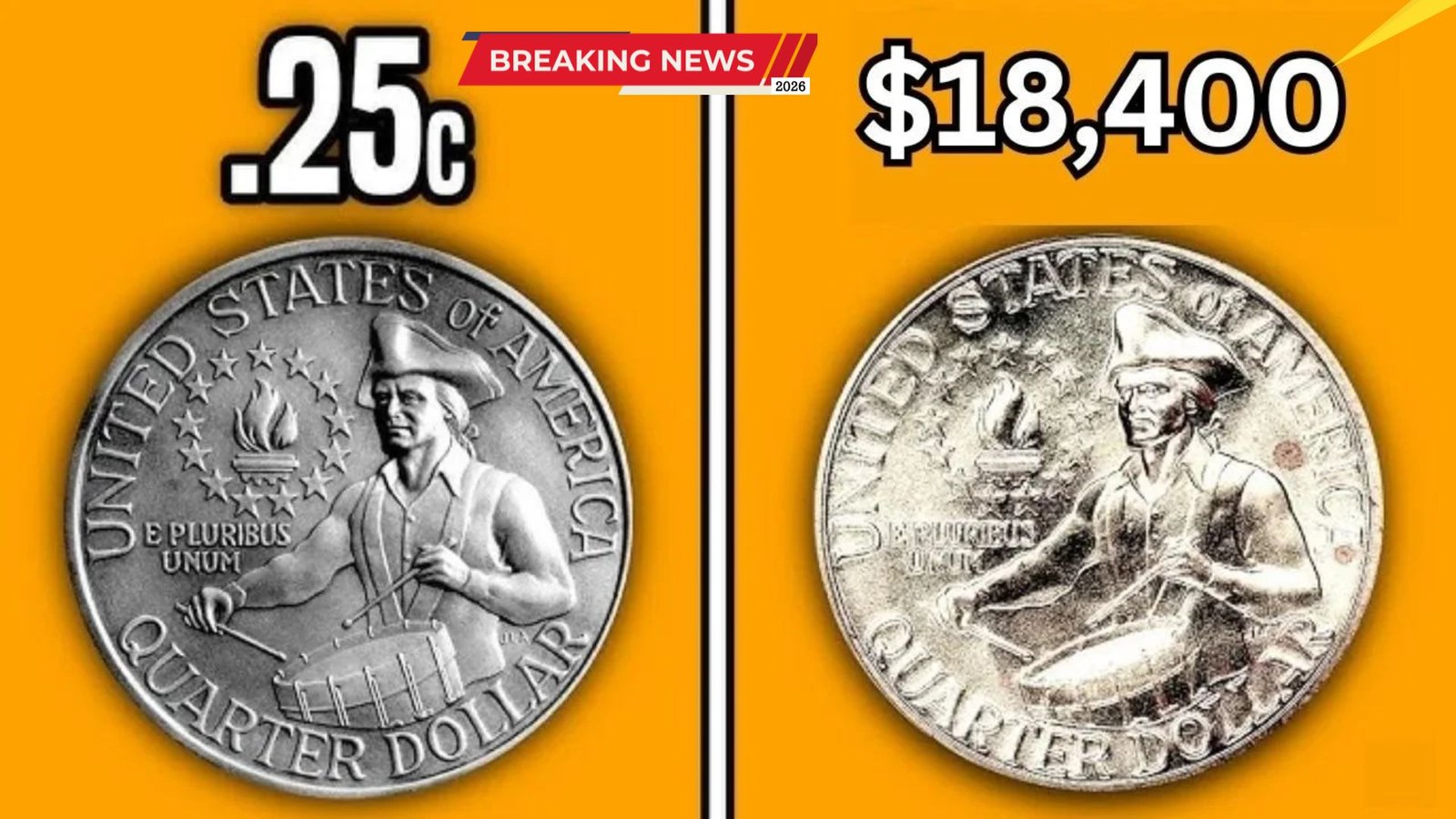
The 1976 Bicentennial Quarter has grabbed national attention after one exceptional coin sold for a stunning $18,400 at auction. This sale surprised many people because the Bicentennial Quarter is a coin most Americans have seen or even used in daily transactions. The event has renewed interest in checking old coin jars, drawers, and collections, as people wonder whether their own Bicentennial Quarter could also be valuable. The record-breaking sale shows that even common-looking coins can reach extraordinary prices when rarity, condition, and historical importance come together.
Why the 1976 Bicentennial Quarter Was Created
The Bicentennial Quarter was issued during the mid-1970s as part of a nationwide celebration of the United States’ 200th anniversary. To mark this milestone, the U.S. Mint decided to temporarily change the design of several circulating coins. For the quarter, the familiar eagle on the reverse was replaced with a special image that reflected the spirit of the American Revolution.
The new reverse design, created by Jack L. Ahr, features a colonial drummer boy along with a victory torch surrounded by thirteen stars. These elements symbolized the original thirteen colonies and the patriotic energy of the Revolutionary era. Every quarter produced during 1975 and 1976 carried the dual date “1776–1976,” making the celebration part of everyday life for millions of Americans. Because of this shared history, the Bicentennial Quarter remains one of the most recognizable modern U.S. coins.
Different Types of Bicentennial Quarters
Although all Bicentennial Quarters share the same dual date and drummer boy design, they were produced in several different versions. Understanding these types is important because value depends heavily on mint mark, metal content, and finish. The table below explains the main varieties and their basic details.
| Type | Mint Mark | Composition | Weight | Finish | Primary Audience | Typical Starting Value (2026) |
|---|---|---|---|---|---|---|
| Circulation Strike | None (Philadelphia) | Copper-Nickel Clad | 5.67 grams | Standard Uncirculated | General Public | Face Value (25¢) |
| Circulation Strike | D (Denver) | Copper-Nickel Clad | 5.67 grams | Standard Uncirculated | General Public | Face Value (25¢) |
| Clad Proof | S (San Francisco) | Copper-Nickel Clad | 5.67 grams | Mirror Proof | Collectors | $3 – $15+ |
| Silver Proof | S (San Francisco) | 40% Silver | 5.75 grams | Mirror Proof | Collectors | $8 – $20+ |
| Silver Uncirculated | S (San Francisco) | 40% Silver | 5.75 grams | Brilliant Uncirculated | Collectors | $7 – $15+ |
These values reflect normal examples. Coins in perfect condition or with rare characteristics can sell for much higher prices.
What Made One Coin Worth $18,400
The quarter that sold for $18,400 was not an ordinary Bicentennial Quarter pulled from circulation. It was a 1976-S Silver Proof quarter produced at the San Francisco Mint. This version was struck using a 40% silver planchet and made specifically for collectors, not for everyday spending.
What truly set this coin apart was its condition. It received a PR70 Deep Cameo grade from a leading professional grading service. A PR70 grade means the coin is considered perfect, with no visible flaws even under magnification. The Deep Cameo designation describes the strong contrast between the frosted design and the mirror-like background. Achieving this level of perfection is extremely rare, especially for a coin that is nearly fifty years old. This combination of silver content, limited production, and flawless preservation pushed the value to record levels.
Circulated Coins Versus Collector Issues
Most Bicentennial Quarters found in pocket change today are circulation strikes made in Philadelphia or Denver. These coins were produced in very large numbers and are made from copper-nickel clad metal. When they show signs of wear, they usually hold only face value, even though they remain popular as historical keepsakes.
Collector issues, on the other hand, were made at the San Francisco Mint. These include proof and uncirculated versions, some of which contain silver. Proof coins have a sharp, mirror-like finish and were carefully struck for collectors. Silver versions also carry additional value because of their metal content. These S-mint coins are the ones that collectors pay closer attention to, especially when they are well preserved.
How People Can Check Their Own Bicentennial Quarters
Many people are now taking a closer look at their own Bicentennial Quarters. Identifying key details can help determine whether a coin has any added value. The first step is to check the mint mark, which appears on the front of the coin near Washington’s portrait. An “S” mint mark is important because it indicates a San Francisco issue.
Weight can also provide clues. Silver quarters weigh slightly more than clad versions. Condition is another major factor. Coins with sharp details, clean surfaces, and original shine are more desirable to collectors. Any scratches, dullness, or signs of cleaning can greatly reduce value. Some collectors also look for minting errors, which can increase interest if they are genuine and clearly visible.
Growing Interest in High-Grade Modern Coins
The strong result at auction highlights a growing focus on quality within the coin collecting market. While millions of Bicentennial Quarters exist, only a tiny number survive in perfect condition. Certified coins with top grades attract serious collectors who are willing to pay premium prices. The Bicentennial design’s widespread recognition also helps maintain demand, especially for rare silver proof examples.
This trend shows that modern coins are not automatically less valuable than older ones. When a coin combines historical importance, limited production, and exceptional preservation, it can become highly sought after. The 1976 Bicentennial Quarter value story is a clear example of this reality.
What This Sale Means Going Forward
The $18,400 sale does not mean that every Bicentennial Quarter is suddenly valuable. Most remain worth only their face value. However, the event reminds people that certain versions, especially silver proof coins in perfect condition, can command impressive prices. It also highlights the importance of proper storage and handling, as even small flaws can make a big difference in long-term value.
Conclusion: Why the Bicentennial Quarter Matters Today
The record-setting auction of a 1976 Bicentennial Quarter shows how a familiar coin can become a major collector item under the right circumstances. The sale happened because the coin was a rare silver proof example preserved in flawless condition and professionally graded. This matters because it encourages collectors and the general public to better understand the differences between ordinary circulation coins and special collector issues. Going forward, readers should understand that while most Bicentennial Quarters are common, a small number stand out due to their metal content, mint origin, and condition. These factors, when combined, can turn an everyday-looking coin into a remarkable piece of numismatic history.