
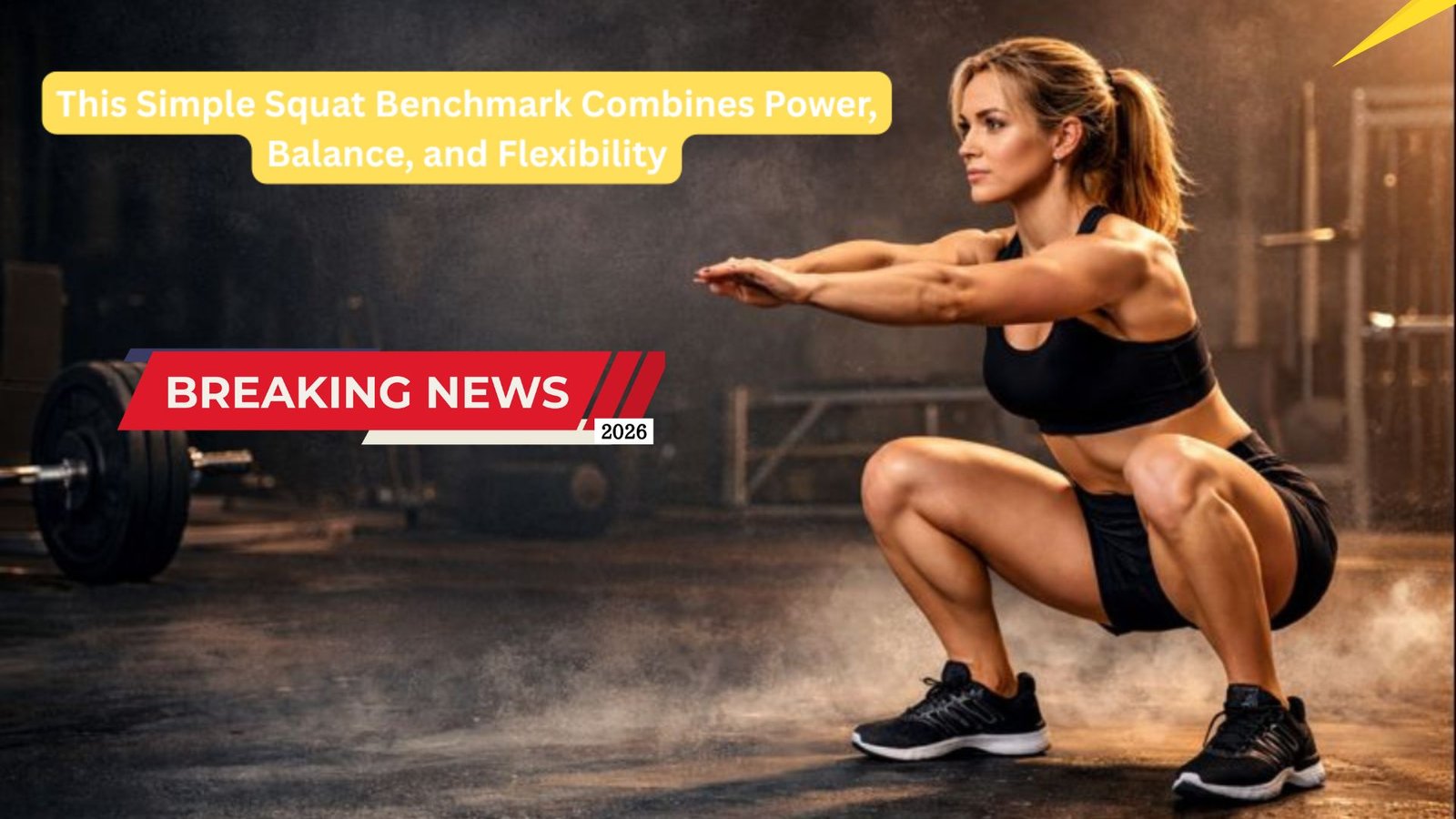
A quick and effective way to check your overall movement health is through a simple bodyweight squat benchmark. This single movement gives you clear information about three important qualities: power, balance, and flexibility. Many people notice these abilities slowly decrease due to long hours of sitting, aging, or irregular exercise. The good thing is this test needs no equipment, takes very little time, and shows real results about how your body is working together.
What the Squat Benchmark Really Tests
This benchmark is not a fast exercise or a high-repetition challenge. Instead, it is a slow and controlled deep squat using only your body weight. You lower yourself as far as you can comfortably go, hold briefly at the bottom, and then stand up again in a smooth way. The focus stays completely on quality of movement rather than speed or how many times you repeat it.
When you perform this squat correctly, many parts of your body have to work at the same time. Your ankles need enough range, your hips must open properly, your spine should stay in a neutral position, and your core has to provide steady support. Because it combines all these elements in one natural motion, any small problem becomes easy to notice right away.
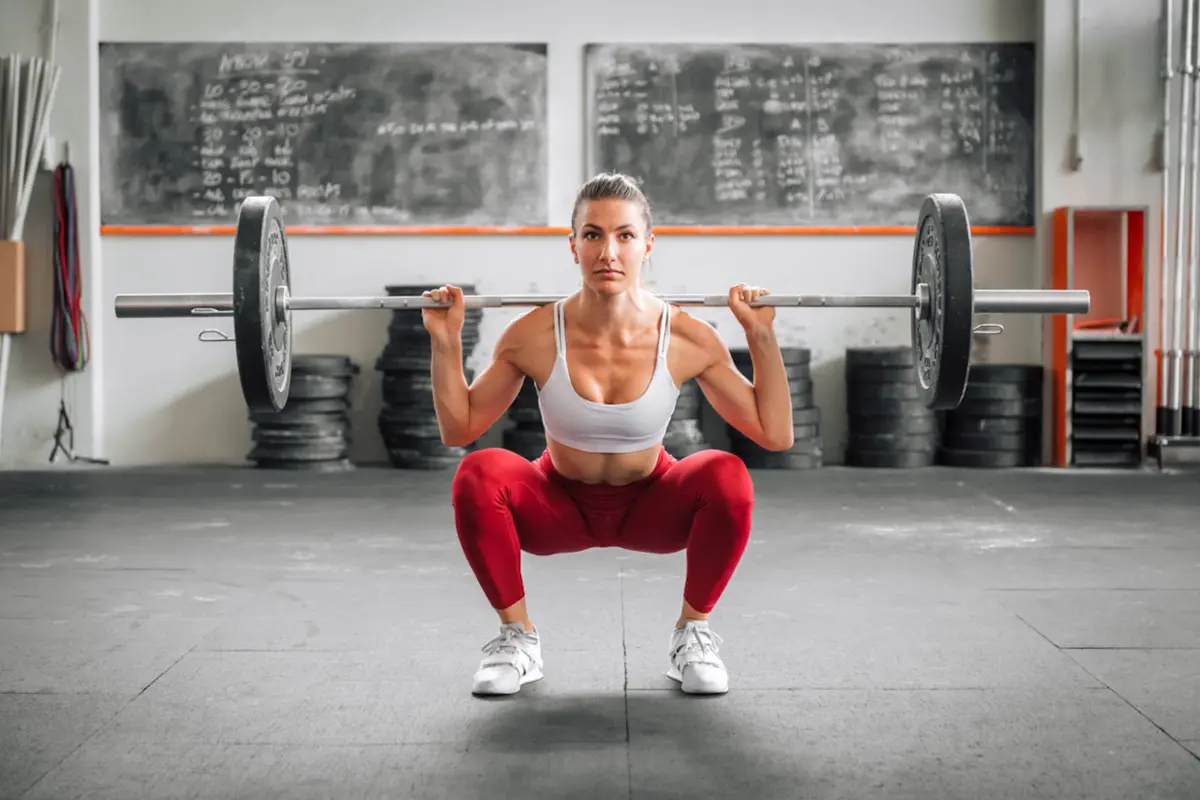
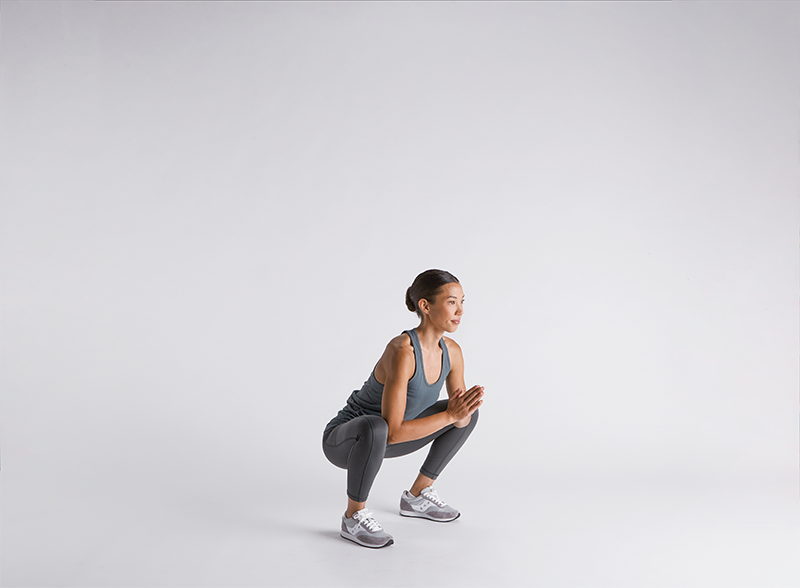
Here is an example of good form during the deep squat pause:
Step-by-Step Guide to Doing the Benchmark Properly
To get the most accurate picture, follow these simple steps carefully:
Stand with your feet placed roughly shoulder-width apart. If it feels more natural, you can turn your toes slightly outward. Take a gentle breath in and brace your core lightly — think of making your stomach firm without holding your breath hard. Slowly lower your body as if you are going to sit on a very low stool. Try to keep both heels completely flat on the ground throughout the movement. Allow your chest to stay relaxed instead of forcing it to point straight up, and maintain a neutral spine position without excessive rounding or arching.
Once you reach your deepest comfortable position, pause there for two to three slow, controlled breaths. This pause is very important because it shows how well you can maintain control and balance under mild tension. Finally, stand back up smoothly without any sudden jerks or loss of balance. The entire movement should feel controlled from start to finish.
What Good Performance Looks Like
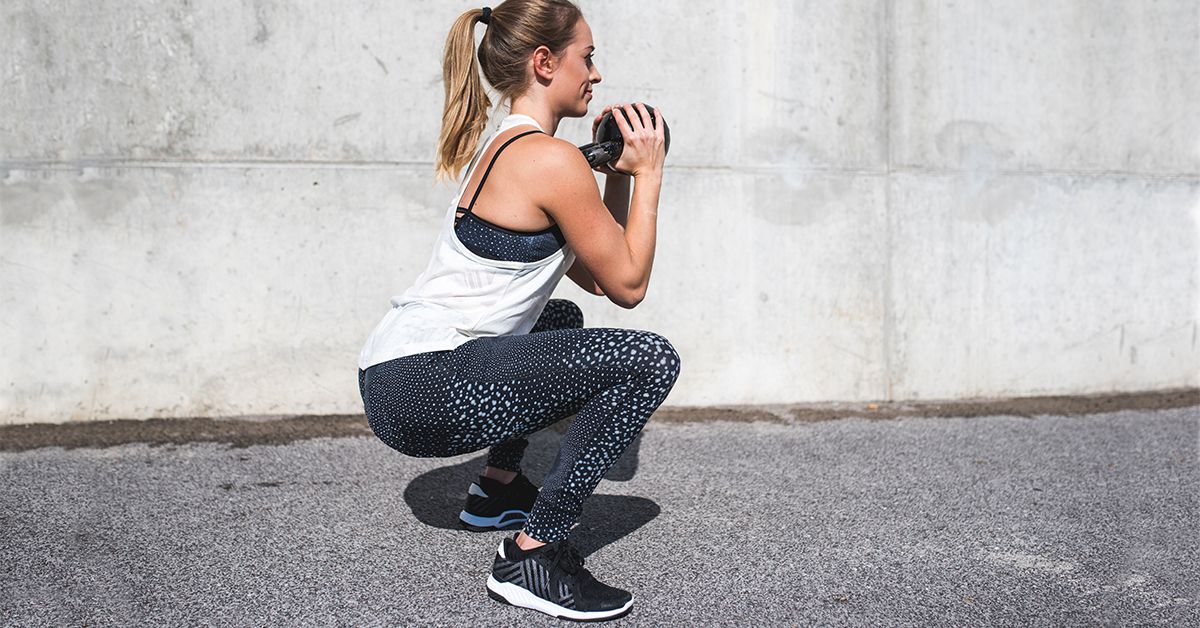
When someone shows strong results in this squat benchmark, several things happen together. The heels remain flat on the floor from beginning to end. The knees move outward in line with the toes instead of falling inward. The torso stays fairly upright or only leans forward slightly in a natural way. Most importantly, the person can hold the bottom position calmly for those few breaths and rise back up without wobbling, shifting weight, or feeling sharp discomfort.
This kind of smooth, stable squat shows that power, balance, and flexibility are working well together — exactly what the body needs for everyday activities.
Here is a clear example of excellent deep squat form with heels grounded:
Deep Squat: How to Do It, Benefits, and Muscles Worked
Common Problems and What They Tell You
Many people notice certain patterns when they first try this test. These patterns are not mistakes — they are valuable clues about areas that need attention.
One frequent issue is heels lifting off the ground during the descent or pause. This usually happens because of limited ankle mobility. Another common compensation occurs when the knees collapse inward toward each other. This pattern often points to weaker muscles around the hips that are supposed to keep the legs stable.
Some individuals lean very far forward with their upper body. This forward lean frequently comes from tight hips or difficulty keeping the core engaged properly. If holding the bottom position feels very hard or shaky, it commonly indicates a combination of flexibility restrictions and balance challenges.
Look at these examples of common compensations:
Heels lifting due to ankle stiffness:

How to Improve Ankle Mobility for Squats | by Anatoli | Medium
Knees caving inward (valgus collapse):

How to Screen for Knee Stability – Squat University
Why This Test Stands Out From Other Fitness Checks
Traditional fitness assessments usually look at one thing at a time. For example, a plank mainly tests core endurance, while a seated stretch checks only hamstring length. The bodyweight squat benchmark is different because it combines everything the way real daily life does. Actions like sitting down in a low chair, standing up from the floor, picking up shopping bags, or walking up stairs all depend on this same mix of strength, control, and range of motion. When this one movement gets better, most people notice easier and more confident daily activities.
How Often You Should Test and How to Make Progress
It is best to check your squat benchmark every two to four weeks. This gives your body enough time to adapt and show real changes. You will typically notice progress through deeper comfortable depth, more steady balance at the bottom, and smoother rising without effort.
To improve safely, focus on gentle mobility work for ankles and hips. Practice holding supported deep squats using a doorframe or sturdy surface for balance. Slow, controlled bodyweight squats (sometimes called tempo squats) also help build the necessary strength and coordination without pushing too hard too soon.
Who Gains the Most From This Simple Check
This benchmark proves especially helpful for adults above 30 years old, people who spend long hours sitting at desks, runners, weightlifters, and anyone starting exercise again after a break. Because it uses only body weight and can be adjusted to any current level, it remains safe and useful for almost everyone when done mindfully.
Final Summary
This easy squat benchmark provides a powerful, honest picture of your movement abilities in one single motion. It combines power, balance, and flexibility without needing any special tools or gym setup. When you work on improving the quality of this squat — deeper position, better control, smoother movement — everyday tasks usually become more comfortable and confident too. Regular checks and small, consistent practice can bring noticeable improvements over time.