
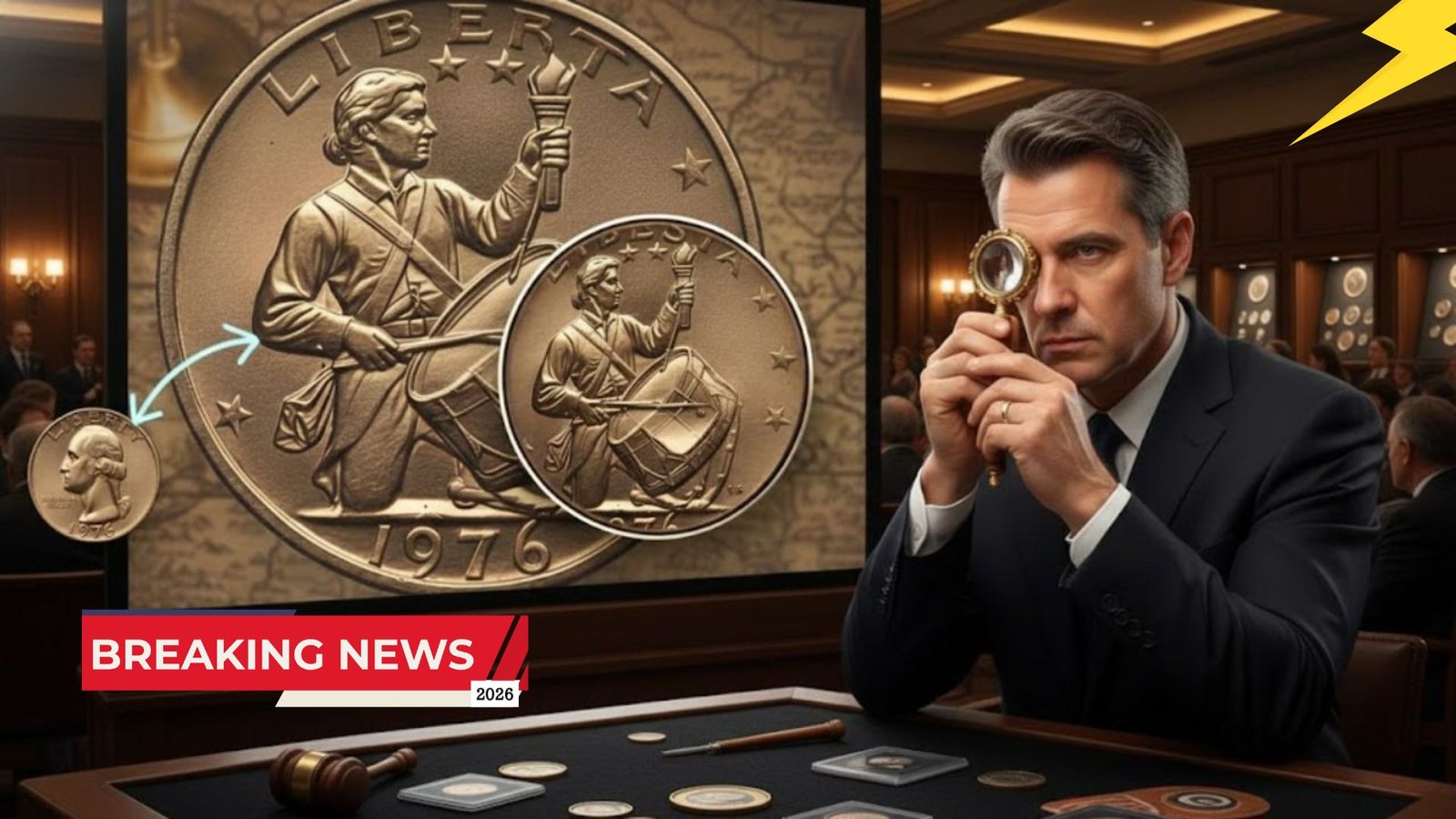
In 1976, the United States marked 200 years since the signing of the Declaration of Independence. To celebrate this milestone, the U.S. Mint released special Bicentennial coins, including a redesigned quarter that quickly became one of the most recognisable coins in modern American history. This quarter features a colonial drummer on the reverse and carries the dual date 1776–1976, setting it apart from all other Washington quarters.
While millions of Bicentennial quarters were produced and most are still common today, not all of them are ordinary. Certain versions, special metal compositions, high-condition coins, and minting errors have turned some examples into valuable collector items. In some cases, these coins are worth hundreds or even thousands of dollars. This article explains the different types of Bicentennial quarters, what makes some rare, and how collectors determine their value.
What Makes the 1976 Bicentennial Quarter Unique
The Bicentennial quarter was the first circulating U.S. coin designed to honour a national event rather than a historical figure. Instead of the usual eagle design, the reverse shows a colonial drummer with a torch surrounded by stars. This design symbolised the spirit of the American Revolution and the country’s 200th anniversary.
Another key feature is the dual date. Instead of a single year, the coin reads 1776–1976, clearly linking it to the Bicentennial celebration. These features give the coin strong historical and cultural appeal, even for people who are not serious collectors.
Because of this significance, many people saved these quarters when they were first released. As a result, large numbers still exist today. However, rarity and value depend on more than just age or design.
Bicentennial Quarter Value Overview
The value of a Bicentennial quarter depends mainly on its type, metal content, condition, and whether it has any mint errors. The table below provides a clear overview of the main categories and their potential value ranges.
| Type of Bicentennial Quarter | Key Feature | Rarity Level | Potential Value Range |
|---|---|---|---|
| Clad circulation quarter | Copper-nickel composition | Very common | Face value to small premium |
| Silver Bicentennial quarter | 40% silver content | Limited | Hundreds to thousands |
| Proof Bicentennial quarter | Mirror-like finish | Scarce | Hundreds to thousands |
| Error Bicentennial quarter | Minting mistakes | Rare | Thousands or more |
| High-grade coin | MS-67 or higher condition | Very rare | Significant premiums |
This table shows why some coins remain everyday change while others attract serious collector attention.
Common Clad Bicentennial Quarters
Most Bicentennial quarters found in circulation today are clad coins. These are made from a copper core with outer layers of nickel, the same composition used for regular quarters. They were produced in very large numbers and released for everyday use.
Because they are so common, circulated clad Bicentennial quarters usually hold little value beyond face value. Even uncirculated examples often carry only a small premium unless they are in exceptionally high condition. For most people, finding one of these coins is more of a nostalgic experience than a financial discovery.
Silver Bicentennial Quarters and Their Appeal
Among the most valuable versions are the silver Bicentennial quarters. These coins were struck with a 40 percent silver composition and were not released into general circulation. Instead, they were sold mainly in special collector sets by the U.S. Mint.
The limited production and silver content make these coins far more desirable than their clad counterparts. Collectors value them both for their metal content and their historical importance. Well-preserved silver Bicentennial quarters often sell for hundreds of dollars, and examples graded in top condition by professional services can reach into the thousands.
Proof Bicentennial Quarters Explained
Proof Bicentennial quarters were produced using specially prepared dies and highly polished blanks. This process results in sharp details and mirror-like surfaces that stand out immediately when compared to regular circulation coins.
Both clad and silver proof versions exist, but silver proofs are the most valuable. Collectors are drawn to proof coins because of their visual appeal and limited availability. Coins that remain in original condition, without scratches or wear, are especially desirable and can command strong prices in the collector market.
Mint Errors That Increase Value
Mint errors add another level of interest to Bicentennial quarters. These errors occur during the production process and can include doubled designs, off-centre strikes, or other unusual features. Because quality control usually catches mistakes, only a small number of error coins reach circulation.
When an error Bicentennial quarter is discovered and professionally authenticated, it can be worth thousands of dollars. Each error is unique, which adds to its appeal. Collectors often compete for these coins because they combine historical significance with rarity.
Circulation Discoveries That Capture Attention
Part of the ongoing interest in Bicentennial quarters comes from real-life discovery stories. People sometimes find silver or error versions in pocket change, old coin jars, or inherited collections. These discoveries often gain attention when shared online, encouraging others to check their own coins more carefully.
Even though such finds are rare, they help keep interest in Bicentennial quarters strong. The possibility, however small, of finding a valuable coin in everyday change continues to attract new collectors.
How Coin Condition Influences Collector Value
Condition is one of the most important factors in determining the value of a Bicentennial quarter. Coins are graded on a numerical scale, with higher numbers indicating better preservation. A coin graded MS-67 or higher is considered to be in exceptional condition.
High-grade coins are rare because most quarters were used in circulation and show signs of wear. A high-grade example can be worth many times more than an average circulated coin of the same type. Professional grading helps confirm both authenticity and condition, which is essential for establishing market value.
Collecting Bicentennial Quarters Today
Many collectors continue to pursue Bicentennial quarters because they are both historically meaningful and relatively accessible. Some collectors aim to build complete sets that include clad, silver, and proof versions. Others focus on finding high-grade examples or rare mint errors.
This flexibility makes Bicentennial quarters appealing to beginners and experienced collectors alike. The combination of history, distinctive design, and potential value keeps demand steady in the numismatic market.
Cultural Importance Beyond Monetary Value
Beyond their financial worth, Bicentennial quarters hold cultural significance. The colonial drummer design reflects the spirit of the American Revolution and the ideals associated with the nation’s founding. For many people, these coins serve as reminders of the Bicentennial celebrations and the sense of national pride surrounding that period.
Because of this, some individuals keep these coins as personal keepsakes rather than investments. Their meaning goes beyond price, connecting history with everyday objects.
What Collectors Learn from Valuable Finds
Stories of valuable Bicentennial quarter discoveries highlight the importance of paying attention to details. Small differences in composition, condition, or minting can dramatically affect value. These examples show why careful inspection and professional evaluation are essential in coin collecting.
They also remind people that historically significant items can sometimes be found in ordinary places. This sense of possibility is part of what makes collecting Bicentennial quarters so appealing.
Conclusion
The 1976 Bicentennial quarter is much more than standard pocket change. While most examples remain common, certain versions stand out due to silver content, proof finishes, high-grade condition, or rare mint errors. These factors can transform an ordinary-looking coin into a valuable collector piece.
Understanding the different types of Bicentennial quarters helps collectors and casual coin holders recognise what they have. The blend of historical importance, unique design, and collectible potential ensures that Bicentennial quarters will continue to attract interest for years to come.