
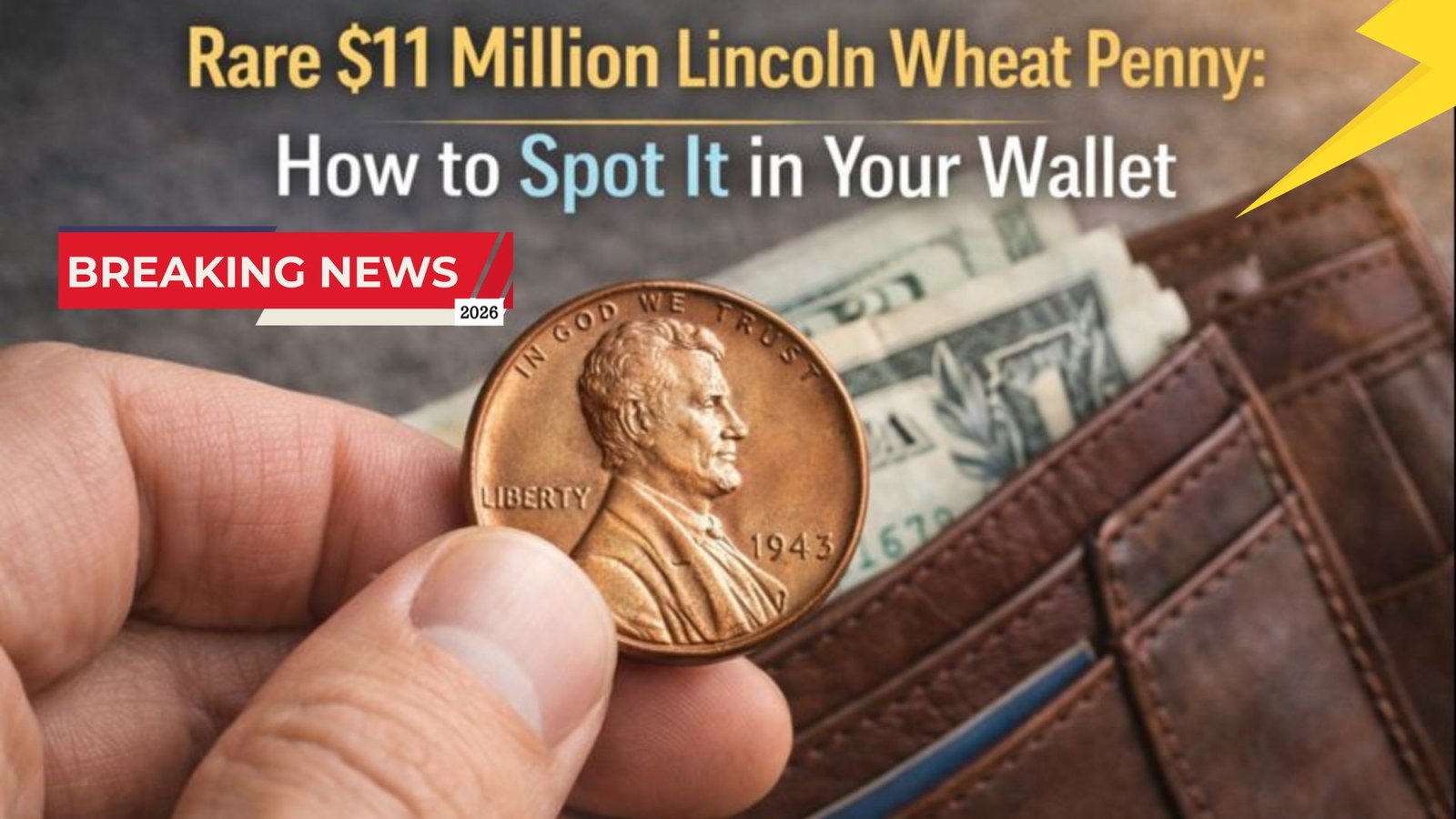
At first glance, a Lincoln Wheat Penny looks like normal loose change that people often ignore or store in jars. However, coin collectors know that a very rare version of this penny has been valued as high as $11 million. This has made the coin one of the most talked-about discoveries in modern coin collecting. What makes the story more surprising is that some of these coins were never supposed to exist, yet a few examples are still missing. Because of this, people continue checking wallets, drawers, and old savings even today.
Why the Lincoln Wheat Penny Is So Valuable
The Lincoln Wheat Penny was produced between 1909 and 1958 and is easy to identify because of the two wheat stalks on the back side. While most of these pennies are worth only a few cents, a very small number became extremely valuable due to rare mistakes and unusual metal use. The high valuation is connected to extreme rarity, historical timing, and minting errors that escaped notice during production.
Collectors place strong value on coins that tell a unique story. In this case, the combination of wartime conditions and minting errors created coins that should not have been released. These rare examples later became some of the most desired coins in the numismatic world.
The $11 Million Coin and What Makes It Special
The coin most often linked to the $11 million valuation is the 1943 copper Lincoln Wheat Penny. During World War II, copper was reserved for military needs. Because of this, the U.S. Mint produced pennies using steel coated with zinc instead of copper.
However, a small number of copper blanks from 1942 accidentally remained in the machines. These blanks were struck with the 1943 design, creating copper pennies that were never planned. As a result, these coins technically should not exist, which makes them incredibly rare and valuable today.
Why So Few 1943 Copper Pennies Exist
Only a very limited number of 1943 copper Wheat Pennies are known to collectors. Most were detected early in the process or melted down once the mistake was discovered. Because so few survived, every verified coin is considered a once-in-a-lifetime discovery.
Over time, interest from high-end collectors increased. As demand rose and confirmed examples remained scarce, estimated values climbed dramatically. This is why these pennies are now associated with multi-million-dollar price tags.
How to Identify a Potential $11 Million Wheat Penny
Spotting a rare 1943 copper Wheat Penny starts with checking the date. A penny marked 1943 is the first requirement. Most 1943 pennies are steel and will stick to a magnet. If the coin does not stick, that is a major sign worth further attention.
Color is another key factor. Steel pennies look silver-gray, while copper versions have a brown or reddish tone. Weight also matters because copper pennies are heavier than steel ones. These simple checks help narrow down whether a coin is ordinary or potentially rare.
Key Identification Differences for 1943 Pennies
| Feature | Common 1943 Steel Penny | Rare 1943 Copper Penny |
|---|---|---|
| Metal | Steel with zinc coating | Copper |
| Magnet Test | Sticks to magnet | Does not stick |
| Color | Silver-gray | Brown or reddish |
| Weight | Lighter | Heavier |
| Rarity | Very common | Extremely rare |
This table helps clearly separate the common version from the rare one, making it easier for readers to understand what to look for.
Check the Reverse Design Carefully
The reverse side of a Wheat Penny should show two wheat ears with the words “ONE CENT” and “UNITED STATES OF AMERICA.” This design is common across many years, but condition still matters a lot. Coins with sharp details, clear lettering, and minimal wear are worth more than heavily worn examples.
Even among rare coins, condition can significantly affect value. Clear wheat lines and strong text improve a coin’s overall appeal to collectors and grading services.
Do Not Clean the Coin
Cleaning old coins is one of the biggest mistakes people make. Even gentle cleaning can permanently damage the surface and reduce collector value. If a coin appears unusual or rare, it should be left exactly as it is.
Professional graders prefer coins in original condition. Any attempt to polish or clean can lower value, even if the coin is authentic and rare.
Other Rare Wheat Pennies Worth Big Money
Although the 1943 copper penny receives the most attention, other Lincoln Wheat Pennies are also highly valuable. The 1909-S VDB and the 1914-D are well-known examples. Some error coins with doubled designs or off-metal strikes can also be worth thousands of dollars or more.
Value depends on rarity, demand, and condition. While not every Wheat Penny is valuable, certain dates and errors continue to attract strong interest from collectors.
Where These Rare Pennies Are Still Found
Surprisingly, rare Wheat Pennies have been discovered in everyday places. People have found them in old coin jars, inherited collections, estate sales, and piggy banks stored away for decades. Many families saved pennies without realizing their future worth.
Because these coins were once regular currency, it is still possible—though rare—for them to appear outside professional collections.
What to Do If You Think You Found One
If someone believes they have found a rare Wheat Penny, the next step is professional authentication. Reputable coin grading services can confirm if the coin is genuine and evaluate its condition accurately.
Selling or trading a potentially rare coin without verification is risky. Proper grading protects both the owner and potential buyers by providing reliable confirmation of value.
Why Collectors Are Willing to Pay Millions
Collectors are not just paying for metal content. They are paying for history. A coin created by a wartime mistake, surviving decades unnoticed, and remaining extremely rare becomes a prized object.
This mix of historical context, scarcity, and collector demand explains why some Lincoln Wheat Pennies have reached astonishing valuations.
Conclusion
The story of the $11 million Lincoln Wheat Penny shows how extraordinary value can exist in ordinary objects. A simple penny, often ignored, became one of the most valuable coins in modern history due to rare minting errors and wartime conditions. For readers, the key takeaway is that understanding dates, materials, and basic identification steps can make a real difference. While finding such a coin is extremely rare, the history proves it is possible, and that is why people continue to check old coins with curiosity.