
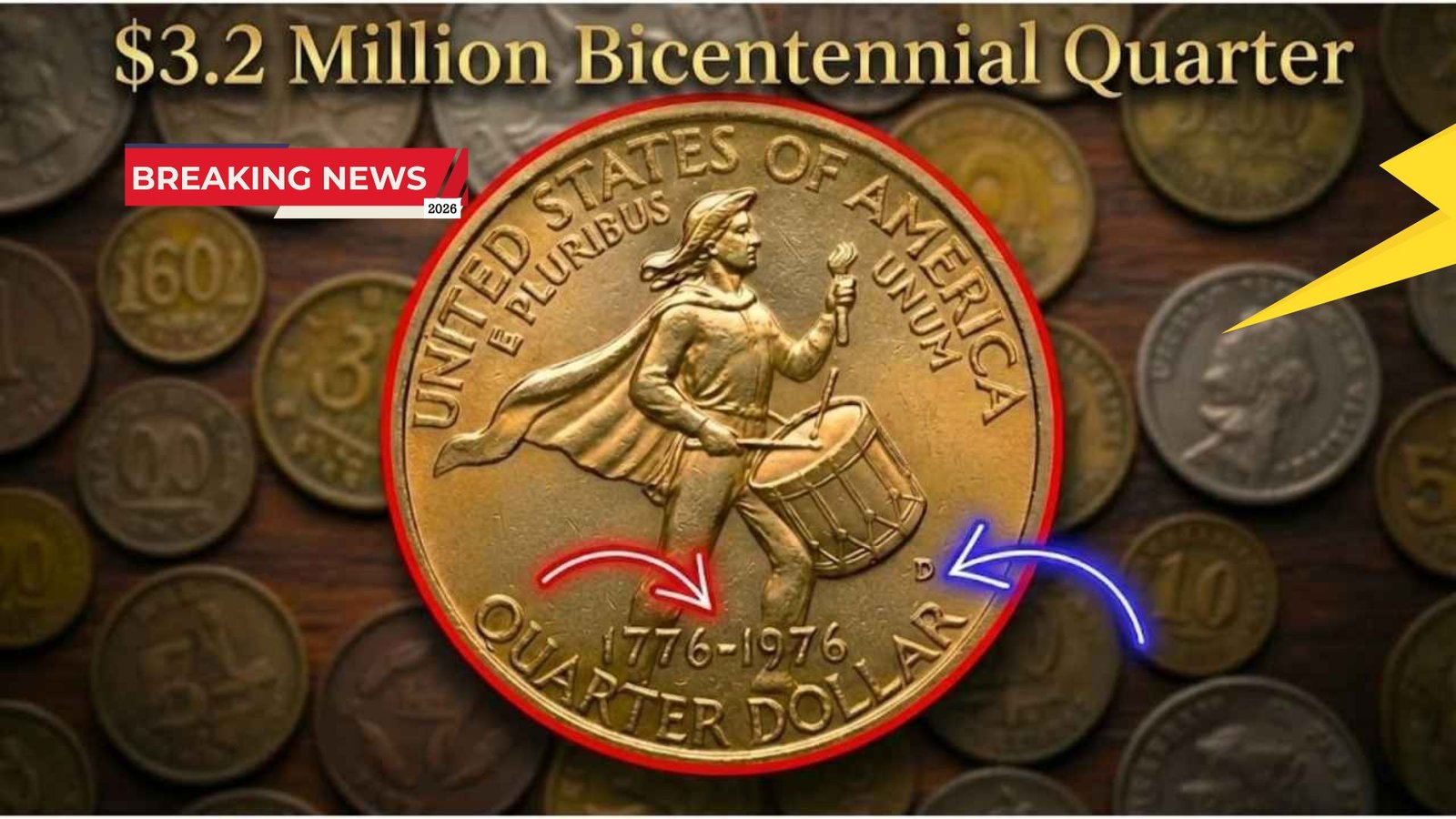
The Bicentennial Quarter is one of the most recognizable coins in the United States. Issued to celebrate 200 years of American independence, it is familiar to collectors and non-collectors alike. Millions of these quarters were produced, and most are still worth only their face value. However, a Rare Bicentennial Quarter has been linked to an extraordinary value of up to $3.2 million, turning this everyday coin into one of the most talked-about topics in modern coin collecting.
This surprising valuation has sparked interest among collectors and everyday people who now look more closely at the quarters in their pockets. Understanding why this specific coin is so valuable, how it differs from ordinary versions, and what features to look for can help determine whether a Bicentennial Quarter is common or potentially priceless.
The History of the Bicentennial Quarter
In the early 1970s, the United States Mint planned a special coinage program to honor the nation’s 200th anniversary. Instead of issuing commemorative medals, the Mint chose to redesign circulating coins so the celebration would reach every American. The quarter was one of the coins selected for this historic tribute.
The Bicentennial Quarter features the dual date 1776–1976 on the front, marking the years of independence and the anniversary. On the reverse side, the traditional eagle was replaced by a colonial drummer, symbolizing the spirit of the American Revolution. The design was created by Jack L. Ahr and quickly became iconic.
These quarters were minted at three locations: Philadelphia, Denver, and San Francisco. Because production numbers were extremely high, most Bicentennial Quarters remain easy to find today. Despite this, a very small number stand apart due to unusual materials, rare errors, or special production methods.
Why One Bicentennial Quarter Is Worth $3.2 Million
The idea that a single quarter could be worth millions may sound unbelievable, but rarity is the foundation of value in coin collecting. The Bicentennial Quarter worth $3.2 million is not a standard circulation coin. Its extreme value is linked to a combination of rarity, unique characteristics, and exceptional condition.
One explanation involves a coin struck on the wrong metal planchet. Standard Bicentennial Quarters were made from copper-nickel, while special collector versions were produced with 40 percent silver. However, the ultra-valuable example is believed to have been struck on a 90 percent silver planchet or an experimental metal blank that was never intended for public release. Such mistakes are incredibly rare.
Another factor that can drive value this high is a perfect or near-perfect strike. Coins with flawless surfaces, sharp details, and no visible marks are extremely uncommon, especially from high-production periods. When a coin combines an unusual composition, outstanding condition, and strong documentation, collectors may be willing to pay record-breaking prices.
Mint Marks and Production Differences
Every Bicentennial Quarter carries the same dual date, but mint marks help identify where the coin was produced. Philadelphia-minted coins have no mint mark, Denver coins carry a “D,” and San Francisco coins display an “S.”
San Francisco is especially important because it produced proof and silver versions intended for collectors. These coins were never meant for circulation and were sold in special sets. While most San Francisco Bicentennial Quarters are still not extremely valuable, certain rare variations from this mint deserve closer attention.
Knowing the mint mark is one of the first steps in determining whether a coin might be worth more than face value.
Key Physical Features to Examine
Identifying a potentially valuable Bicentennial Quarter requires careful inspection. Weight is one of the most important clues. A standard copper-nickel quarter weighs about 5.67 grams, while silver versions weigh closer to 5.75 grams. Even a small difference can suggest an unusual metal composition.
The edge of the coin is another useful indicator. Copper-nickel quarters show a visible copper stripe along the edge. Silver quarters, by contrast, have a solid silver-colored edge. If a Bicentennial Quarter lacks the copper stripe, it deserves further examination.
Surface quality also matters. Coins with sharp details, clean fields, and no signs of wear are far more desirable than scratched or worn examples. The rarest coins often appear almost perfect, even decades after being struck.
Rare Mint Errors That Increase Value
Mint errors play a major role in transforming ordinary coins into valuable collectibles. Bicentennial Quarters are known to exist with several types of errors, though most are minor. However, major errors can significantly increase value.
Doubled die errors cause letters or numbers to appear doubled, often visible on the date or inscriptions. Off-center strikes, missing design elements, and weak strikes can also occur. Among the most valuable errors are coins struck on the wrong metal planchet.
A quarter accidentally struck on a silver or experimental planchet is extremely rare. These errors usually occur when blanks are mixed during production. If such a coin passes inspection and enters circulation, it becomes a unique and highly desirable discovery.
Proof coins can also have errors. Because proof coins are made with extra care, mistakes on them are far rarer than on regular circulation coins. A proof Bicentennial Quarter with a major error and excellent condition can attract intense collector interest.
The Importance of Coin Condition
Condition, also known as grade, has a massive impact on a coin’s value. Coins are graded on a detailed scale that measures wear, surface marks, and overall appearance. Even a rare coin can lose much of its value if it shows heavy wear or damage.
The Bicentennial Quarter associated with the $3.2 million valuation is believed to be in near-perfect or perfect condition. Such coins are exceptionally rare, especially among high-mintage issues. Clean surfaces, strong luster, and sharp details are essential features.
Professional grading services play a key role in determining condition. These organizations use magnification and strict standards to assign an official grade. A high grade from a trusted service adds credibility and can dramatically increase market value.
Bicentennial Quarter Types and Value Factors
| Feature | Common Bicentennial Quarter | Rare High-Value Quarter |
|---|---|---|
| Metal Composition | Copper-nickel | Rare silver or experimental metal |
| Weight | Around 5.67 grams | Heavier than standard |
| Edge | Visible copper stripe | Solid silver-colored edge |
| Condition | Circulated or lightly worn | Near-perfect or proof-like |
| Mint Errors | None or minor | Major error or wrong planchet |
| Market Value | Face value | Up to $3.2 million |
How to Get a Bicentennial Quarter Valued
If you believe you may have a rare Bicentennial Quarter, the first rule is not to clean it. Cleaning can scratch the surface and permanently reduce value. Instead, store the coin in a protective holder to prevent further damage.
The next step is to consult a reputable coin dealer or send the coin to a professional grading service. These experts can verify authenticity, confirm the metal composition, and identify any mint errors. If the coin is truly rare, it may be suitable for auction, where competitive bidding can drive prices to extraordinary levels.
Proper documentation and grading are essential before making any claims about high value.
This Coin So Important
The story of a Rare Bicentennial Quarter worth $3.2 million captures attention because it turns a familiar piece of pocket change into a potential fortune. While the vast majority of Bicentennial Quarters are common and worth only face value, a tiny number stand apart due to rare materials, minting errors, and exceptional condition.
What matters most is understanding the details. Knowing the history, checking weight and edge, recognizing error features, and appreciating the importance of professional grading can help separate ordinary coins from extraordinary ones. Even if the million-dollar version is never found, the Bicentennial Quarter remains a powerful symbol of American history and a reminder that remarkable discoveries can still exist in plain sight.