
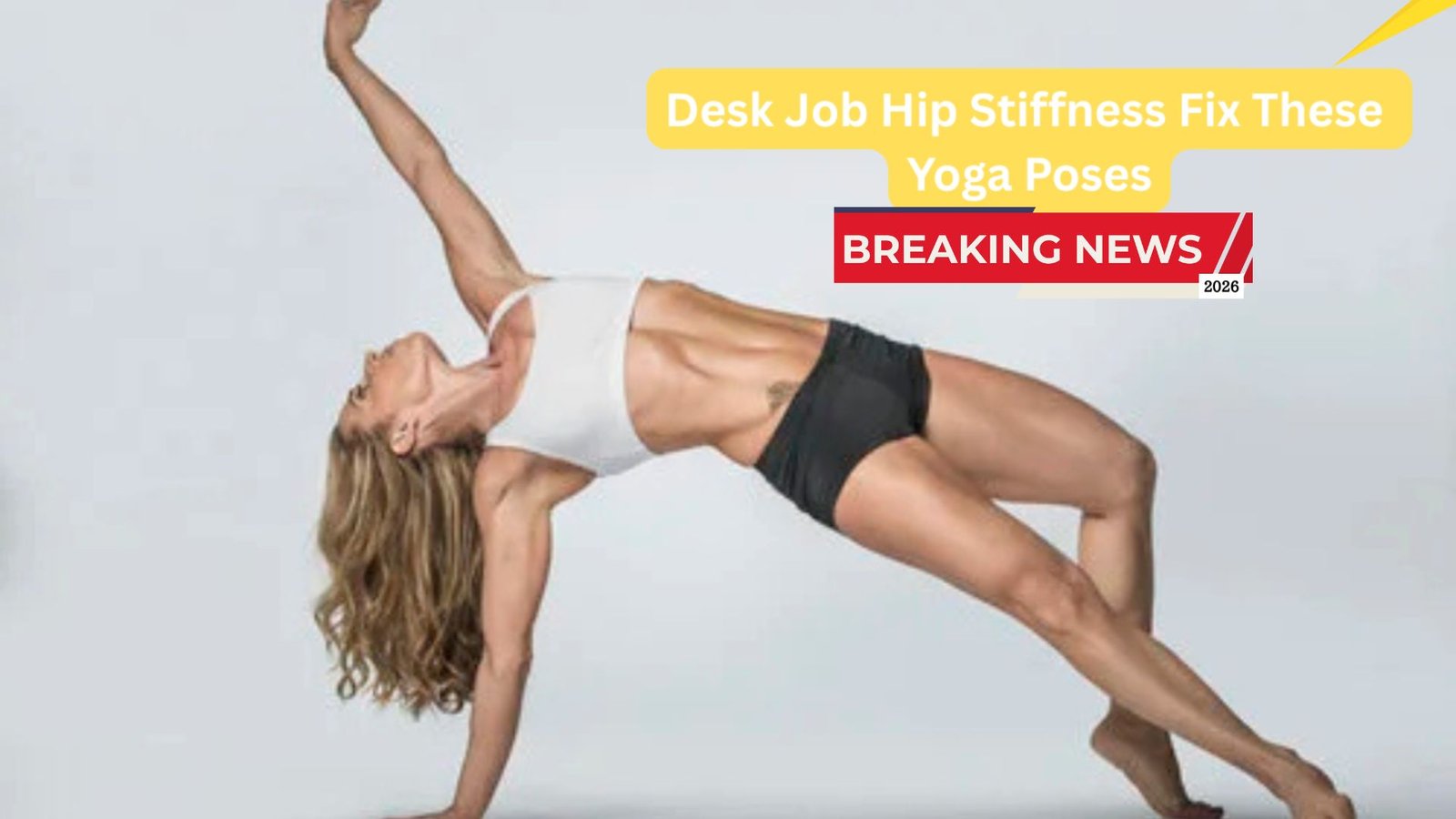
Sitting for long hours at a desk is one of the most common reasons people develop hip stiffness. The hips stay bent in the same position all day, which shortens the front hip muscles (hip flexors), weakens the buttock muscles (glutes), and slowly reduces the natural smooth movement of the hip joints. Over months and years, this leads to tight hips, discomfort in the lower back, poor posture while standing or walking, and even a feeling of heaviness in the legs by evening.
The encouraging part is that you don’t need heavy gym workouts or complicated routines to bring back comfort and mobility. A few simple, gentle yoga poses practiced regularly can release built-up tension, improve blood flow, and help the hips feel open and free again.
Why Sitting So Long Creates Hip Problems
When you remain seated for most of the working day, the hip joints hardly move through their full range. Reduced movement means less natural lubrication in the joints and slower circulation around the pelvis. At the same time, the body tightens muscles around the hips as a protective response. Work stress often adds another layer, causing people to unconsciously hold extra tension in the lower body. All these factors combine to make hips feel stiff and restricted.
Regular gentle movement through yoga directly counters these effects. It brings back natural motion, encourages better blood supply, and helps the nervous system relax so muscles stop gripping so tightly.
Why Yoga Gives Better and Lasting Relief Than Regular Stretching
Many people try basic stretches for tight hips, but they often notice the tightness returns quickly. Yoga works differently because it combines slow, mindful movement with steady breathing and complete awareness of the body. This approach calms the nervous system, which allows deep hip muscles to release more naturally and completely. The result is relief that lasts longer and feels easier to maintain.
Standing Forward Fold for Quick Tension Release
One of the easiest poses to do after sitting for hours is a gentle standing forward fold. Stand with feet hip-width apart, bend your knees generously, and let your upper body hang forward. Allow your head and arms to relax completely. This position helps the pelvis tilt naturally and releases tightness in the hips and lower back without creating strain. It takes only one to two minutes and can be done during short work breaks or right after returning home.
Low Lunge to Gently Lengthen Tight Hip Flexors
The low lunge pose directly works on the hip flexors — the muscles at the front of the hips that become short and tight from constant sitting. Step one foot forward into a lunge, lower the back knee to the floor (you can place a cushion under the knee), and gently shift your hips forward while keeping the back tall. Breathe slowly and deeply. This pose gradually restores the natural backward movement of the hip, making it easier to stand up straight and walk without that tight feeling.
Butterfly Pose to Soften Inner Hip Muscles
Butterfly pose is excellent for opening the inner hips and groin area, which often feel locked after long desk hours. Sit on the floor, bring the soles of your feet together, and let your knees fall gently outward. If your knees are very high, place cushions or folded blankets under them for support. Rest your hands on your feet or the floor and breathe calmly. This supported version allows the inner hip muscles to relax deeply without forcing anything.
Here are examples of comfortable, supported butterfly pose variations perfect for beginners:
Seated Figure Four for Outer Hip and Glute Release
Many desk workers also develop tightness in the outer hips and glute muscles, which can pull on the lower back. In seated figure four, sit tall, place one ankle over the opposite thigh, and gently press the raised knee away while keeping the back straight. You can do this pose even while sitting on a chair at your desk. It releases the outer hip area and improves overall hip rotation.
Cat-Cow Movement for Pelvic Mobility
The cat-cow exercise is a simple flowing movement done on hands and knees. Inhale to gently arch the back and lift the chest (cow), then exhale to round the spine and tuck the pelvis (cat). Moving slowly between these two positions increases circulation around the hips and pelvis while loosening the entire lower spine. It is one of the best ways to reverse the stiffness that comes from sitting still for hours.
Wide-Knee Child’s Pose for Complete Relaxation
Wide-knee child’s pose gives the hips a gentle opening while letting the whole body rest. Kneel on the floor, spread your knees wide, bring your big toes together, and fold forward, resting your forehead on the ground or on stacked hands. This pose is especially helpful when you feel mentally tired along with physical stiffness.
Simple Supine Poses for Evening Recovery
Lying on your back offers some of the easiest and most effective relief. In knee-to-chest pose, hug both knees gently toward your chest, rocking slightly side to side. This decompresses the hips and lower spine after a full day of compression. For a gentle twist, let both knees fall to one side while keeping shoulders on the floor — this restores natural rotational movement in the hips and spine.
Reclined butterfly pose is another favorite for the end of the day. Lie on your back, bring the soles of the feet together, and let the knees fall open. Place cushions under the knees for extra comfort. Stay here for five to ten minutes to allow the hips to open slowly and deeply.
How Much Time You Need and Best Timing
You don’t need hours of practice. Even 10 to 15 minutes every day can bring clear improvement. Most people find the best results when they do these poses after finishing work or right before going to bed. This timing helps prevent stiffness from settling in overnight.
Important Breathing Technique for Faster Improvement
The way you breathe makes a big difference. Try slow nasal breathing: take a gentle inhale through the nose, then make your exhale a little longer than the inhale. Longer exhales naturally tell the body to relax, helping tight hip muscles soften more quickly and completely.
Mistakes Desk Workers Should Avoid
Many people make the same errors when trying to fix hip stiffness. They push too hard into stretches, forget to breathe properly, or rush through the poses. Remember that pain is never a sign of good progress. Gentle, relaxed movement with mild sensation works much better for long-term relief.
Signs That Your Hips Are Improving
As you continue these yoga poses regularly, you will notice several positive changes. Standing up from a chair becomes smoother and easier. Your posture naturally improves while sitting and standing. Walking feels lighter, and lower-back tightness reduces noticeably. Many desk workers also report better sleep quality and much less fatigue at the end of the day.
Final Summary
Long hours of sitting cause hip stiffness that affects comfort, posture, and daily movement. The gentle yoga poses described here — including low lunge, butterfly pose, figure four, and restorative supine positions — directly address the tightness in hip flexors, glutes, and inner/outer hips. Regular short practice improves mobility, circulation, and relaxation. With consistency, desk workers can enjoy freer, more comfortable hips, reduced lower-back strain, and easier movement throughout the workday.